 Tenable
Tenable Review: Why Security Teams Swear by This Vulnerability Scanner
Tenable has been a staple in cybersecurity for over two decades. From Nessus (the world's most deployed vulnerability scanner) to the Tenable One exposure management platform, they offer a full suite of tools for identifying, prioritizing, and remediating security vulnerabilities. But is it worth the enterprise price tag? We break down everything IT security teams need to know.
Spratt Enterprise Editorial Team
Software reviewed and tested independently
Our Verdict
Tenable is the industry standard for vulnerability management. Nessus detects over 70,000 CVEs and the risk-based prioritization (VPR scoring) helps security teams focus on what actually matters instead of drowning in alerts. The platform is powerful but comes with enterprise pricing and a learning curve. If you are serious about securing your organization, Tenable belongs on your shortlist.
Best for: IT security teams, MSSPs, penetration testers, compliance-driven organizations, and any business that needs to identify and remediate vulnerabilities across IT, cloud, and OT environments.
What Is Tenable?
Tenable is a cybersecurity company that specializes in exposure management and vulnerability assessment. They have been in the security space since 2002 when they created Nessus, which became the most widely deployed vulnerability scanner in the world. Today, Tenable offers a full platform of security products that go well beyond basic scanning.
The core idea is simple: you cannot protect what you cannot see. Tenable scans your entire environment (networks, cloud infrastructure, Active Directory, OT/IoT devices, web applications) to identify vulnerabilities, misconfigurations, and security weaknesses. Then it prioritizes what to fix first based on real-world exploit data, not just severity scores.
In this Tenable review, we cover every major product, the pricing structure, and how it compares to competitors like Qualys, Rapid7, and CrowdStrike. If you are evaluating business and security tools, this will help you decide if Tenable is the right investment.
Tenable Product Suite
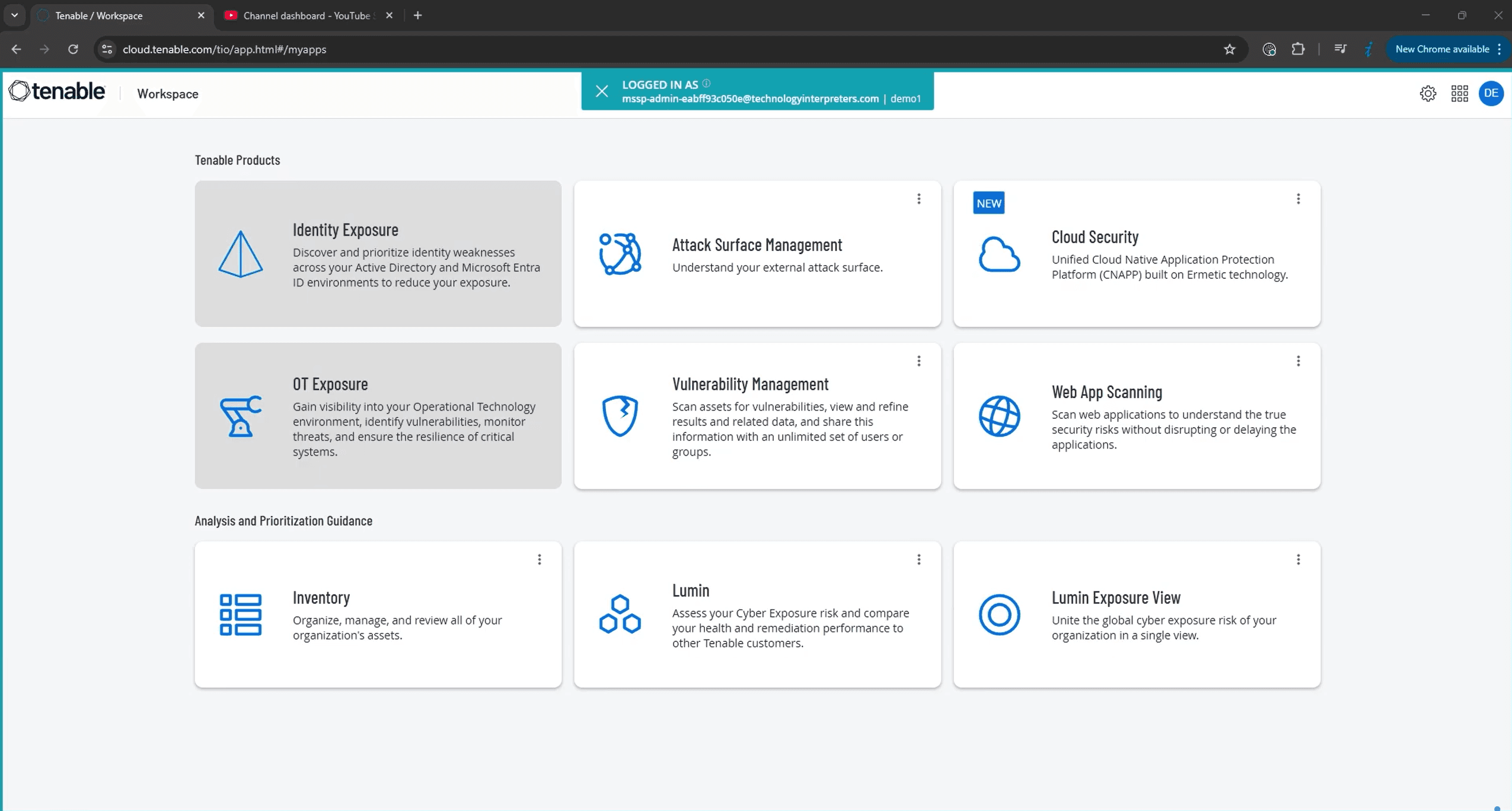
Tenable is not a single product. It is a suite of security tools that can be purchased individually or together under the Tenable One platform. Here is what each product does:
Nessus Professional
Nessus is the product that made Tenable famous. It is a vulnerability scanner that detects over 70,000 CVEs (Common Vulnerabilities and Exposures) across your network. It works by deploying agents on endpoints or running network-based scans to identify security flaws in operating systems, applications, configurations, and more.
Nessus includes over 450 pre-configured scan templates based on CIS benchmarks, making compliance assessments fast. It supports credentialed and uncredentialed scans, meaning it can test systems with or without login access. It even runs on a Raspberry Pi if you need a lightweight deployment.
Nessus Professional is priced at $4,790/year for a single license. Multi-year discounts bring the 3-year cost to $13,637.
Tenable Vulnerability Management (formerly Tenable.io)
This is the cloud-based version of Tenable's vulnerability management. It provides real-time scanning and monitoring with customizable dashboards that show total vulnerabilities, scan coverage, highest risk assets, and remediation progress.
The key advantage over standalone Nessus is the cloud management console, multi-scanner support, and the ability to manage vulnerability data across distributed environments. Pricing is based on the number of assets you want to protect, starting at roughly $3,500/year for 65 assets.
Tenable One (Exposure Management Platform)
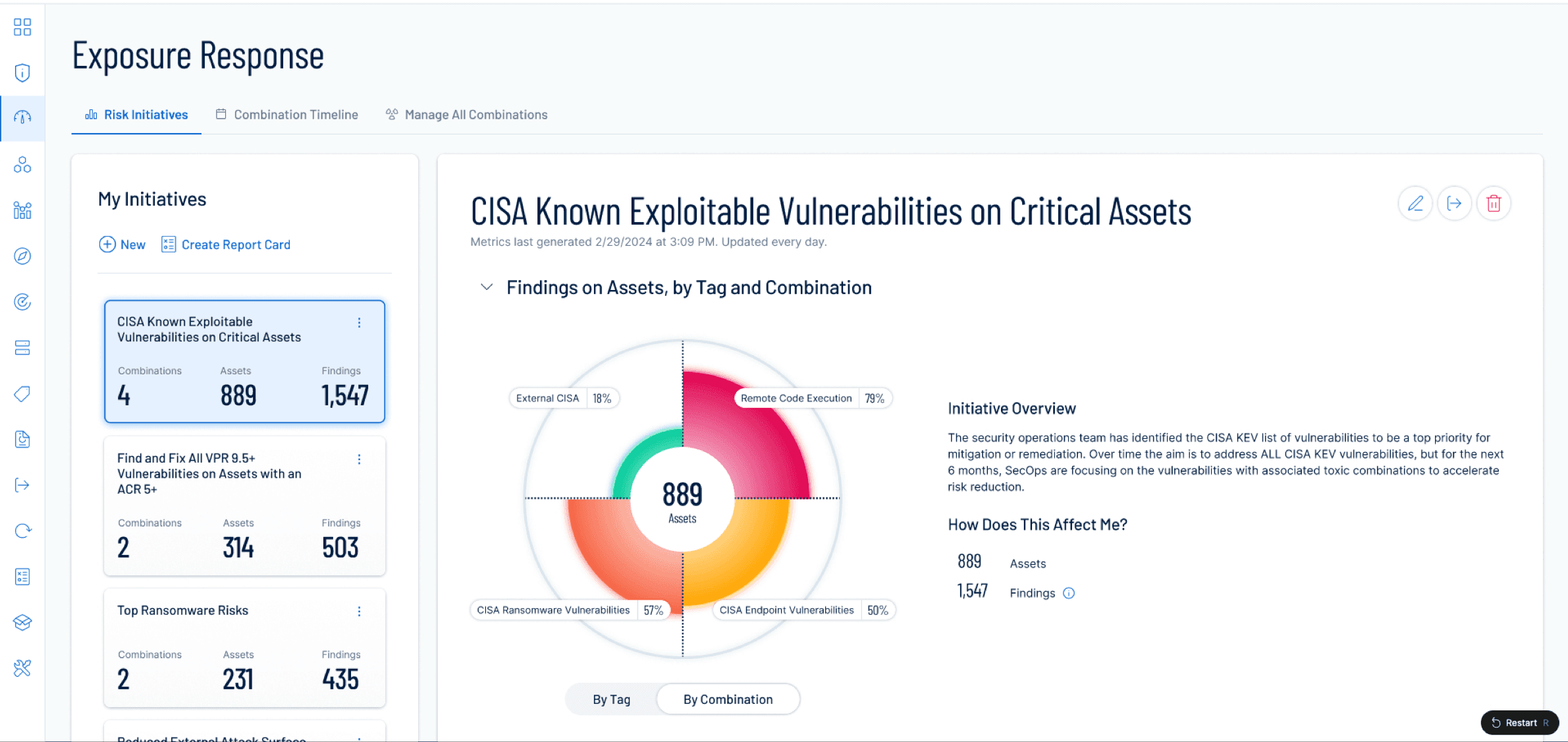
Tenable One is the flagship platform that brings everything together. It combines vulnerability management, cloud security, identity exposure, attack surface management, and web application scanning into a single unified view. It uses AI to map attack paths and predict which vulnerabilities are most likely to be exploited.
This is the enterprise-grade product for organizations that need full visibility across IT, cloud, OT, and identity environments. Pricing is custom based on environment size.
Key Features
Vulnerability Priority Rating (VPR)
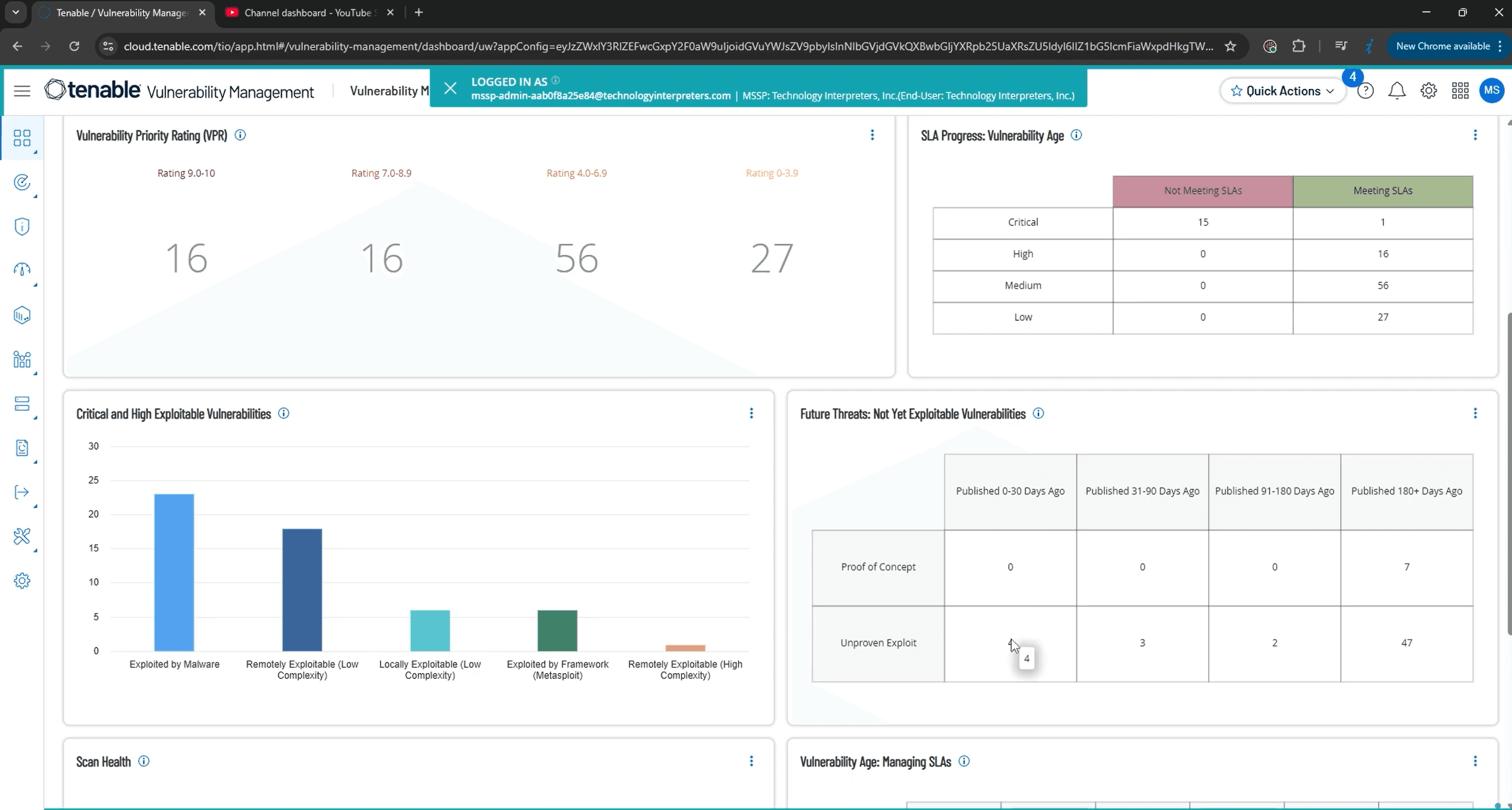
This is one of Tenable's most valuable features. The traditional CVSS scoring system rates vulnerabilities on a 0-10 scale, but it does not account for real-world exploit data. Tenable's VPR takes CVSS scores and layers on additional intelligence: Is this vulnerability being actively exploited? Does it require physical access or can it be triggered remotely? How complex is the exploit?
The result is a more accurate risk score. A vulnerability with a CVSS score of 10 (critical) might get a VPR of 6 because the exploit requires local access and significant complexity. This helps security teams stop chasing every critical alert and focus on what is actually dangerous.
Multiple Scan Types
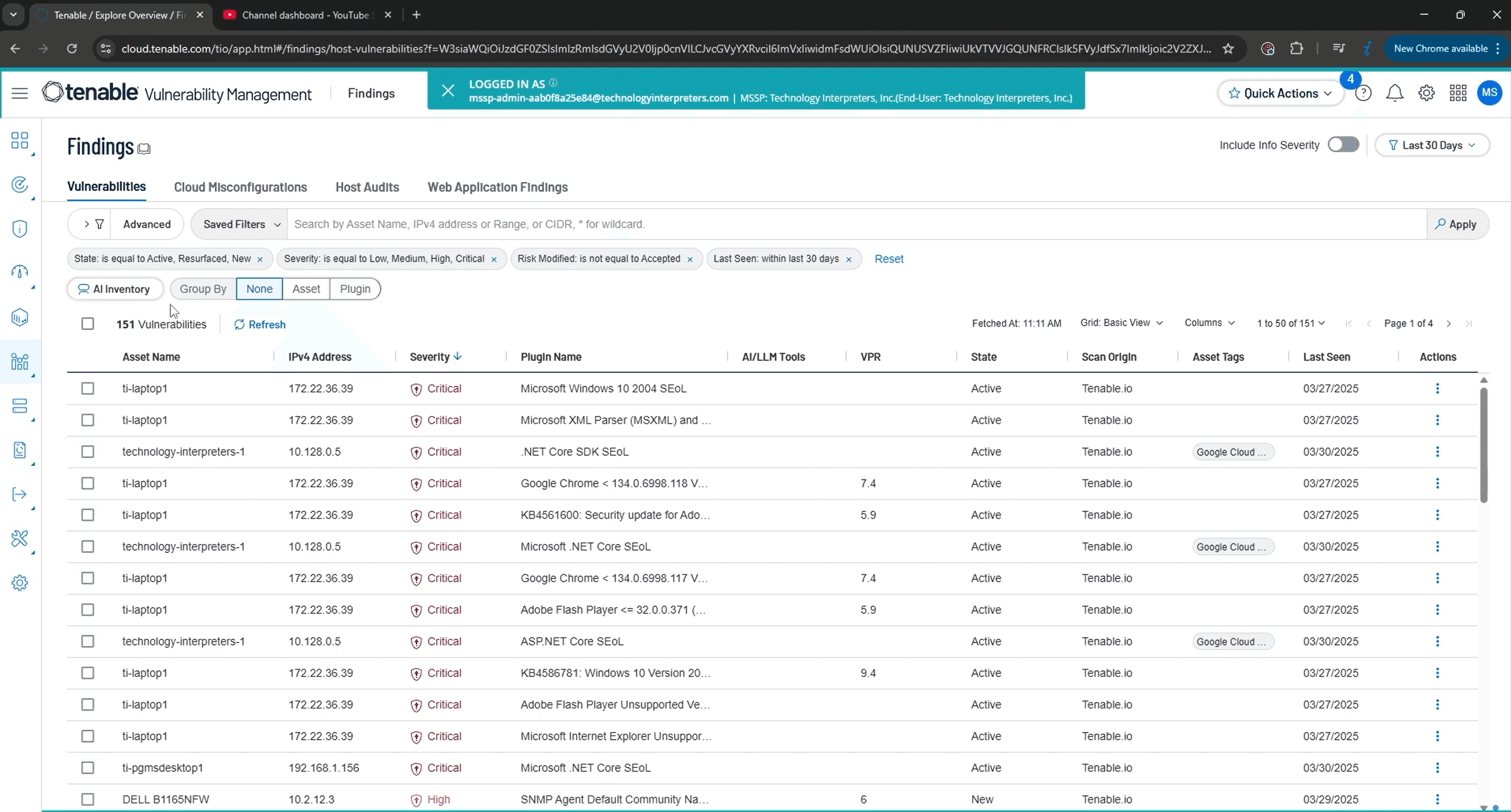
Tenable supports several scanning methods to cover different environments:
- Agent-based scans install a lightweight agent on endpoints for deep visibility into installed software, configurations, and vulnerabilities
- Network-based scans scan across your network using credentialed or uncredentialed methods
- Cloud-based scans target AWS, Azure, and GCP environments
- Web application scans test websites for vulnerabilities by crawling and interacting with forms, logins, and dynamic content
- Host discovery scans identify everything on your network including IoT devices, smart home devices, and unknown endpoints
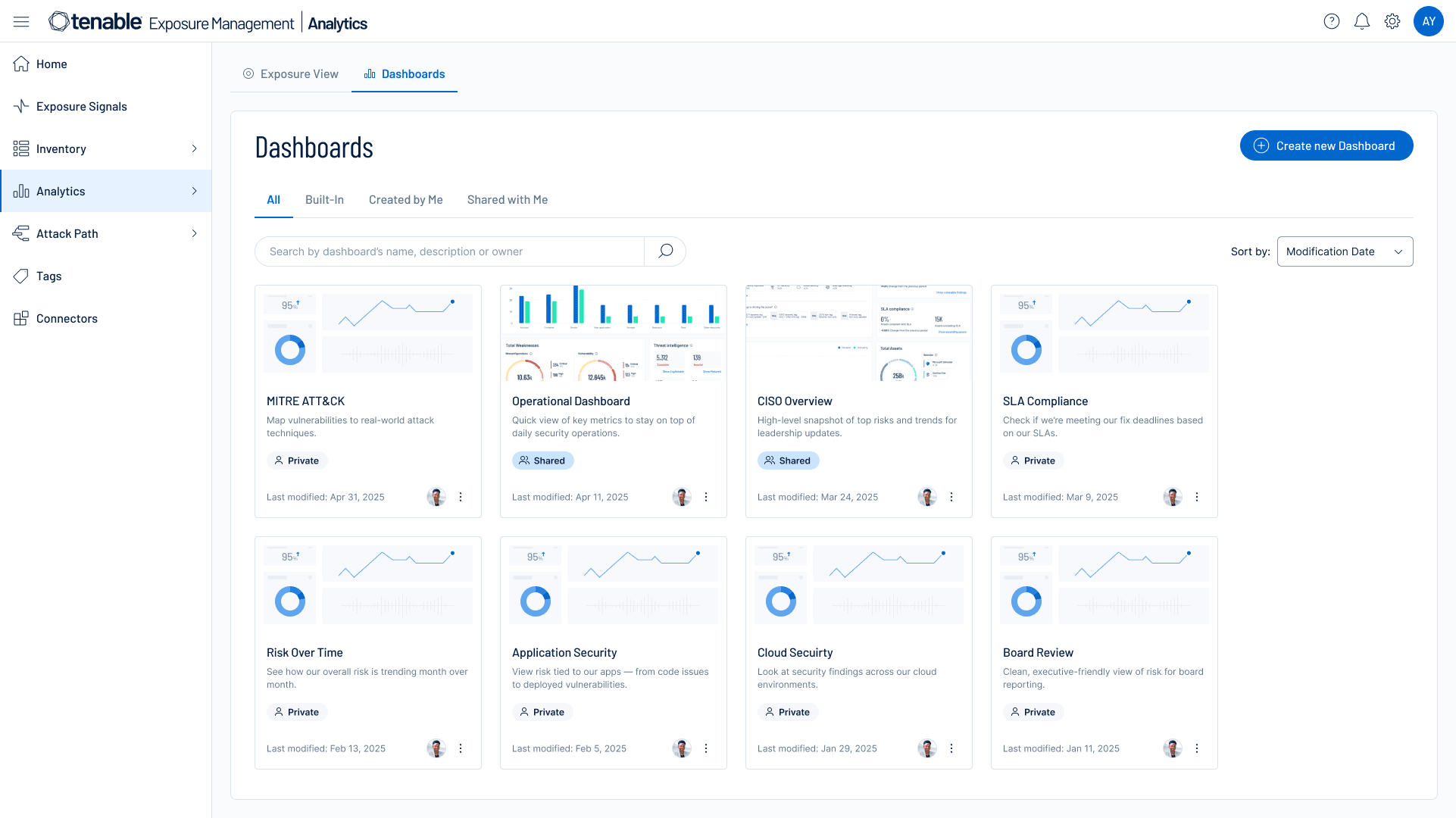
Customizable Dashboards and Reporting
Tenable comes with pre-built dashboards that show vulnerability counts by severity, asset coverage, scan history, and remediation progress. You can create custom dashboards and build queries using a filter system that lets you drill down by severity, VPR score, asset type, vulnerability state (active, new, resurfaced, fixed), and more.
Reports can be exported in multiple formats and scheduled for automatic delivery. The 30/60/90 day metrics view is especially useful for tracking remediation progress over time and demonstrating security posture improvements to leadership.
AI Detection
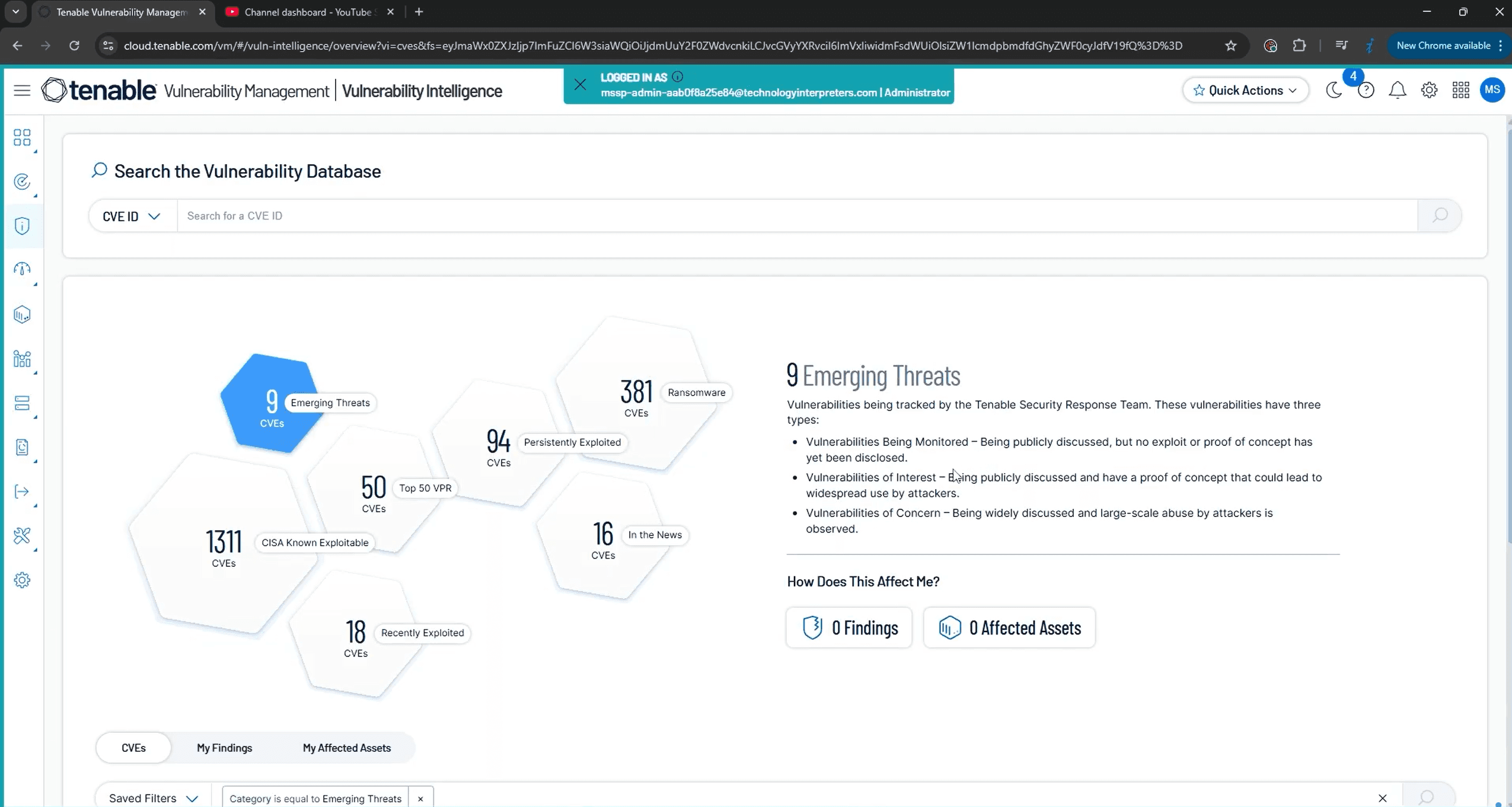
A newer addition to Tenable is the ability to detect AI usage within your environment. The scanner can identify when employees are using AI tools (including tools like Grammarly that use large language models) across your network. For organizations with AI governance policies, this is a significant capability that most competitors do not yet offer.
Attack Surface Management
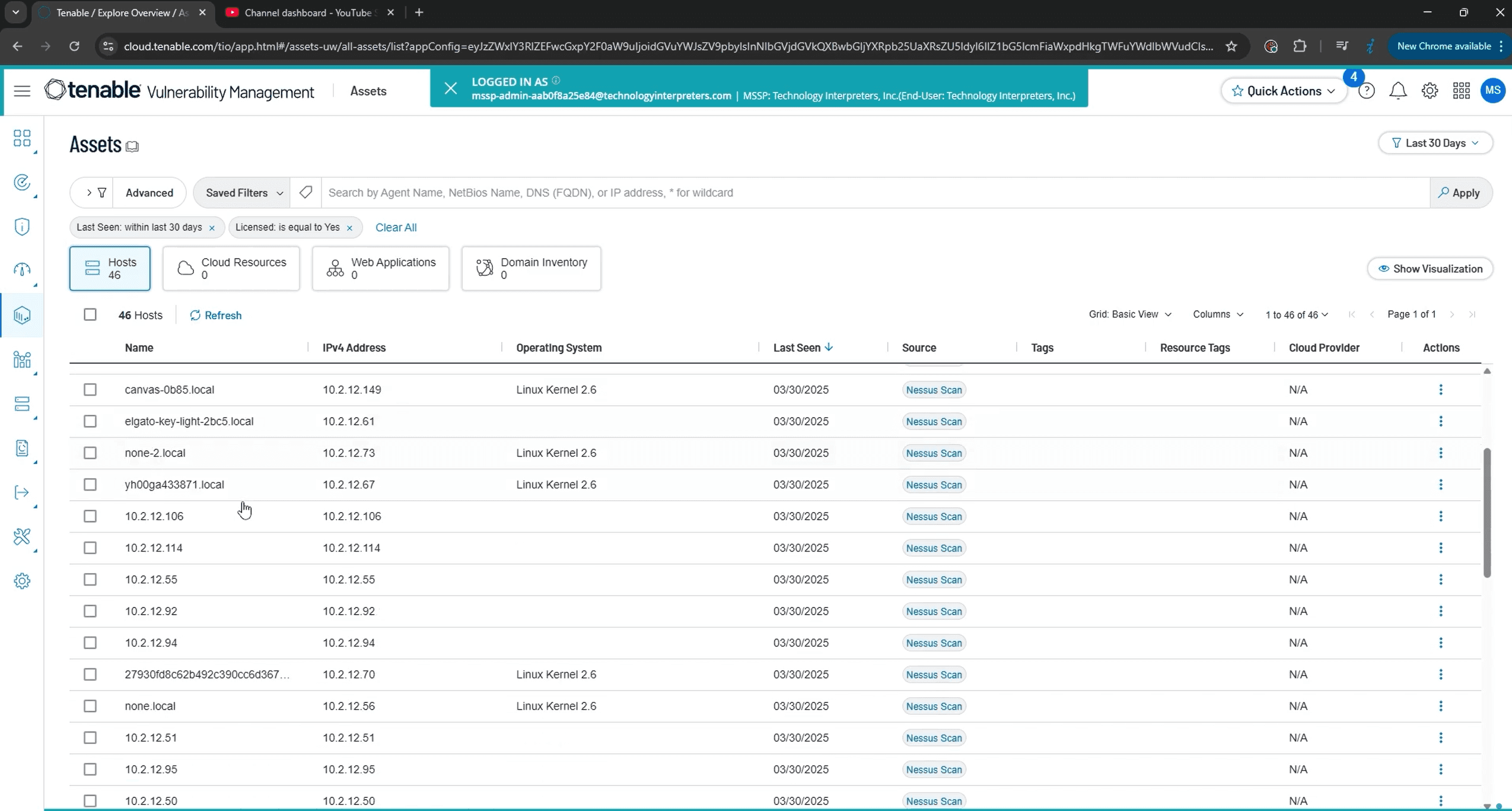
Tenable maps the paths that attackers could take to compromise your systems. Instead of just listing vulnerabilities in isolation, it shows you how they connect and which combinations create the highest risk. This helps security teams understand their exposure in context rather than as a list of unrelated alerts.
OT/IoT Security
Tenable has dedicated capabilities for operational technology environments (manufacturing plants, utilities, industrial facilities). It can scan PLCs (programmable logic controllers), sensors, and industrial control systems that most vulnerability scanners cannot reach. This is a niche but critical capability for organizations in manufacturing, energy, and utilities.
Identity Exposure (Active Directory Security)
Tenable scans Active Directory environments to identify misconfigurations, excessive privileges, and vulnerabilities that attackers commonly exploit for lateral movement. Active Directory is one of the most frequently targeted systems in enterprise breaches, making this a high-value feature.
Integrations
Tenable integrates with major enterprise tools including AWS, Microsoft Azure, GCP, Splunk, ServiceNow, IBM Security, and more. It also has a robust API for custom integrations and supports Zapier for connecting to additional tools. The ServiceNow integration is especially popular for automatically creating remediation tickets. If you are evaluating other CRM and sales tools or AI-powered platforms for your business, we cover those categories as well.
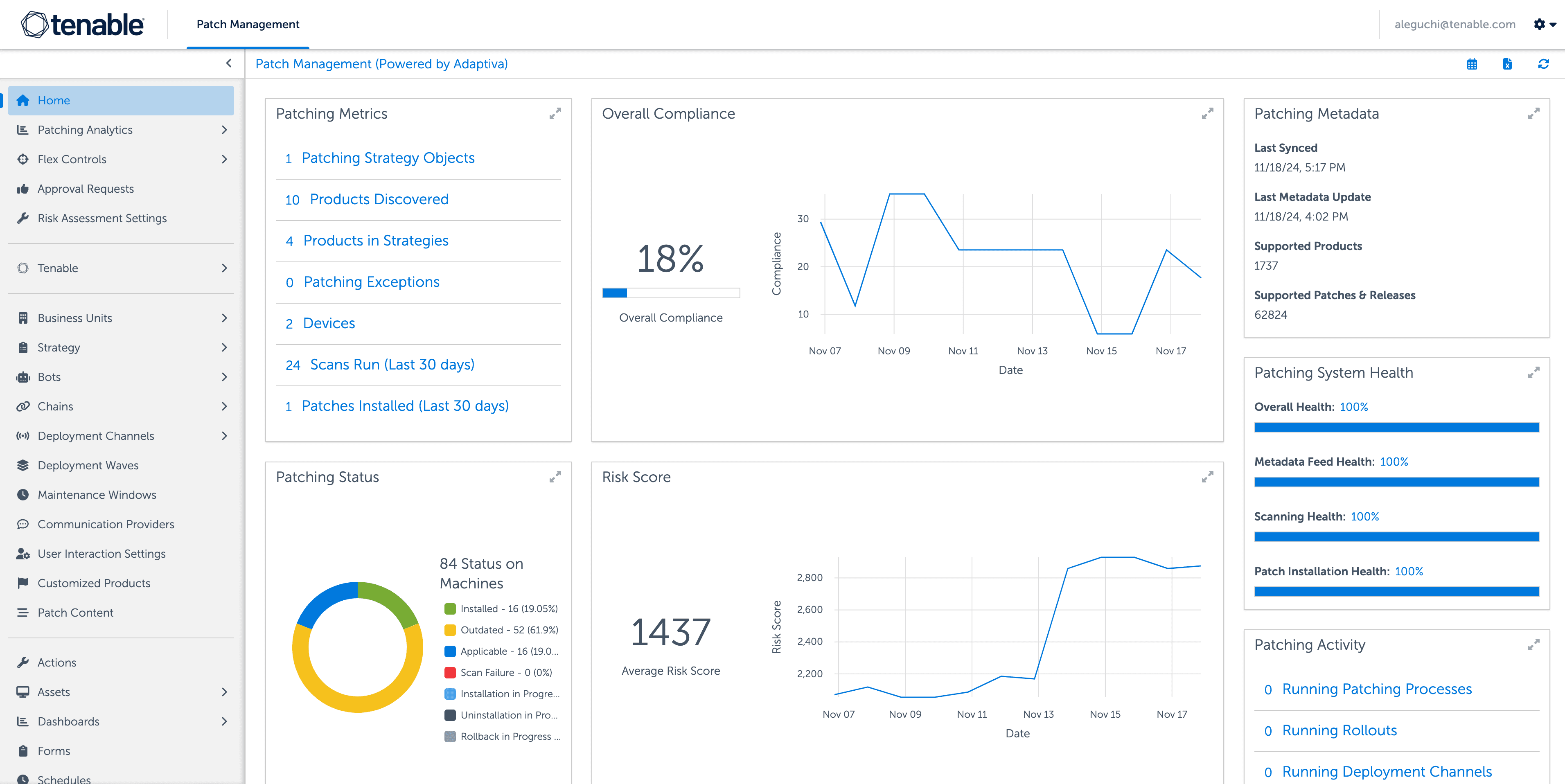
Is Tenable Worth the Price?
At $4,790/year for Nessus Professional alone, this is not a casual purchase. But here is the context that matters: the average cost of a data breach in 2024 was $4.88 million according to IBM. A single unpatched vulnerability in a public-facing system can lead to ransomware, data theft, regulatory fines, and business disruption that costs orders of magnitude more than any security tool subscription.
For organizations with 50+ endpoints, the math works. Tenable identifies vulnerabilities that patch management alone misses. The VPR scoring saves security teams hours of manual triage every week. And the compliance reporting capabilities can replace separate audit tools.
Where it does not make sense: solo IT consultants or very small businesses with minimal infrastructure. In those cases, the free Nessus Essentials (limited to 16 IPs) or open-source alternatives like OpenVAS can cover basic scanning needs. Small businesses looking for more affordable tools might want to check out platforms like Keap for CRM and business management instead.
Who Is Tenable Best For?
- IT security teams at mid-size to enterprise organizations who need comprehensive vulnerability management
- MSSPs (Managed Security Service Providers) who manage vulnerability scanning across multiple client environments
- Penetration testers who need Nessus for professional assessments
- Compliance-driven organizations in healthcare, finance, government, and energy that need CIS benchmark assessments and audit-ready reports
- Organizations with OT/IoT environments that need visibility into industrial control systems
- Security professionals learning vulnerability management as a career skill
Who Should Skip Tenable?
- Very small businesses with limited IT infrastructure where the cost is hard to justify
- Teams looking for a simple, plug-and-play security scanner with minimal configuration (Tenable has a learning curve)
- Organizations that only need basic antivirus or endpoint protection (Tenable is not an endpoint protection platform)
What We Like
- Industry standard: 70,000+ CVEs detected, more than any competitor
- VPR scoring provides better prioritization than raw CVSS scores
- Multiple scan types: agent, network, cloud, web app, host discovery
- 450+ pre-built scan templates for CIS compliance
- AI detection capability for identifying AI tool usage in your environment
- OT/IoT scanning for industrial and manufacturing environments
- Active Directory security scanning catches identity-based attack paths
- Customizable dashboards with powerful query and filter system
- Integrates with AWS, Azure, GCP, Splunk, ServiceNow, and more
- Nessus can deploy on nearly anything including Raspberry Pi
- Free trial available for Nessus Professional
What Could Be Better
- Enterprise pricing: Nessus starts at $4,790/year
- Steep learning curve for teams new to vulnerability management
- Dashboard customization is limited on some plans
- Contact list/asset view feels outdated in some areas
- Customer support response times can be slow during peak periods
- No free tier for ongoing use (trial only)
- Mobile experience has reported bugs and loading issues
- Some features require separate product licenses (web app scanning, cloud security)
Tenable Pricing
Tenable's pricing varies by product. Here is what to expect:
| Product | Pricing | Best For |
|---|---|---|
| Nessus Professional | $4,790/year (single license) | Pen testers, consultants, small teams |
| Nessus Expert | $6,990/year | Advanced scanning + IaC + cloud |
| Tenable Vulnerability Mgmt | Around $3,500/year (65 assets) | Cloud-managed scanning for teams |
| Tenable One | Custom (contact sales) | Full exposure management platform |
| Advanced Support | $400/year add-on | Priority support access |
Tenable is not cheap. This is enterprise security software priced for organizations that take vulnerability management seriously. The value proposition is that a single unpatched vulnerability can cost an organization millions in breach damages, making the cost of prevention significantly lower than the cost of a breach.
Multi-year licensing provides discounts (3-year Nessus Pro at $13,637 saves about 5% versus annual). Tenable does offer a free trial of Nessus Professional so you can test before committing.
Tenable vs Qualys: Which One Should You Choose?
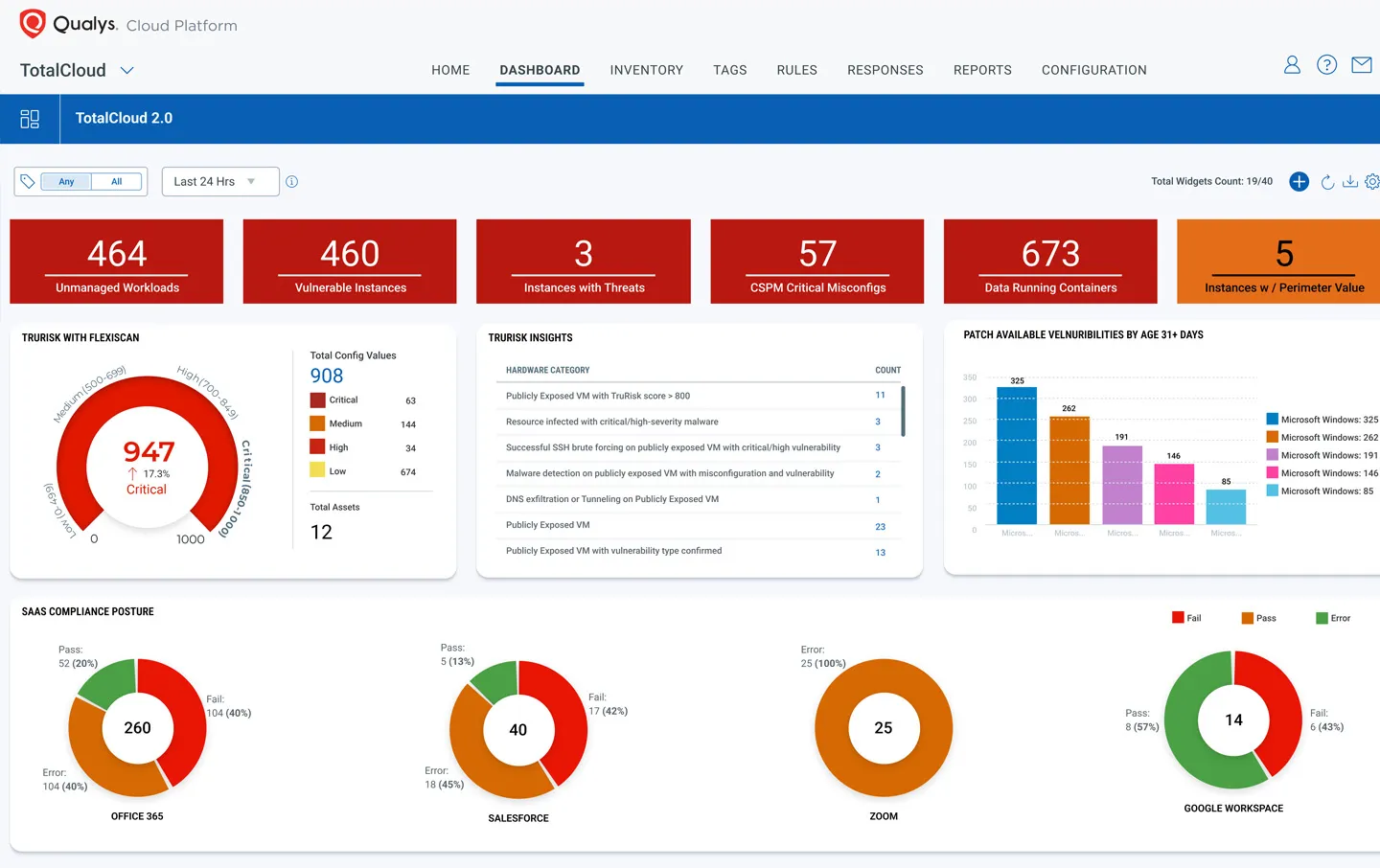
This is the most common comparison in vulnerability management. Both Tenable and Qualys are Gartner Leaders, both have massive CVE libraries, and both serve enterprise customers. But they approach the problem differently.
Tenable is built around vulnerability prioritization. The VPR scoring system takes raw CVSS data and layers on real-world threat intelligence to tell you what is actually dangerous right now, not just what has a high severity score on paper. Tenable also has stronger OT/IoT scanning capabilities and the newer AI detection features.
Qualys leans more toward compliance and asset management. Their VMDR (Vulnerability Management, Detection, and Response) platform includes patch management built in, which Tenable does not. Qualys also has a broader set of compliance modules out of the box, which makes it attractive for organizations in heavily regulated industries.
The bottom line: If your primary goal is finding and prioritizing vulnerabilities with the deepest coverage and best risk intelligence, Tenable is the stronger pick. If you need vulnerability management tightly integrated with compliance frameworks and patch deployment, Qualys has an edge. Many large organizations actually run both.
Tenable vs Rapid7: Key Differences
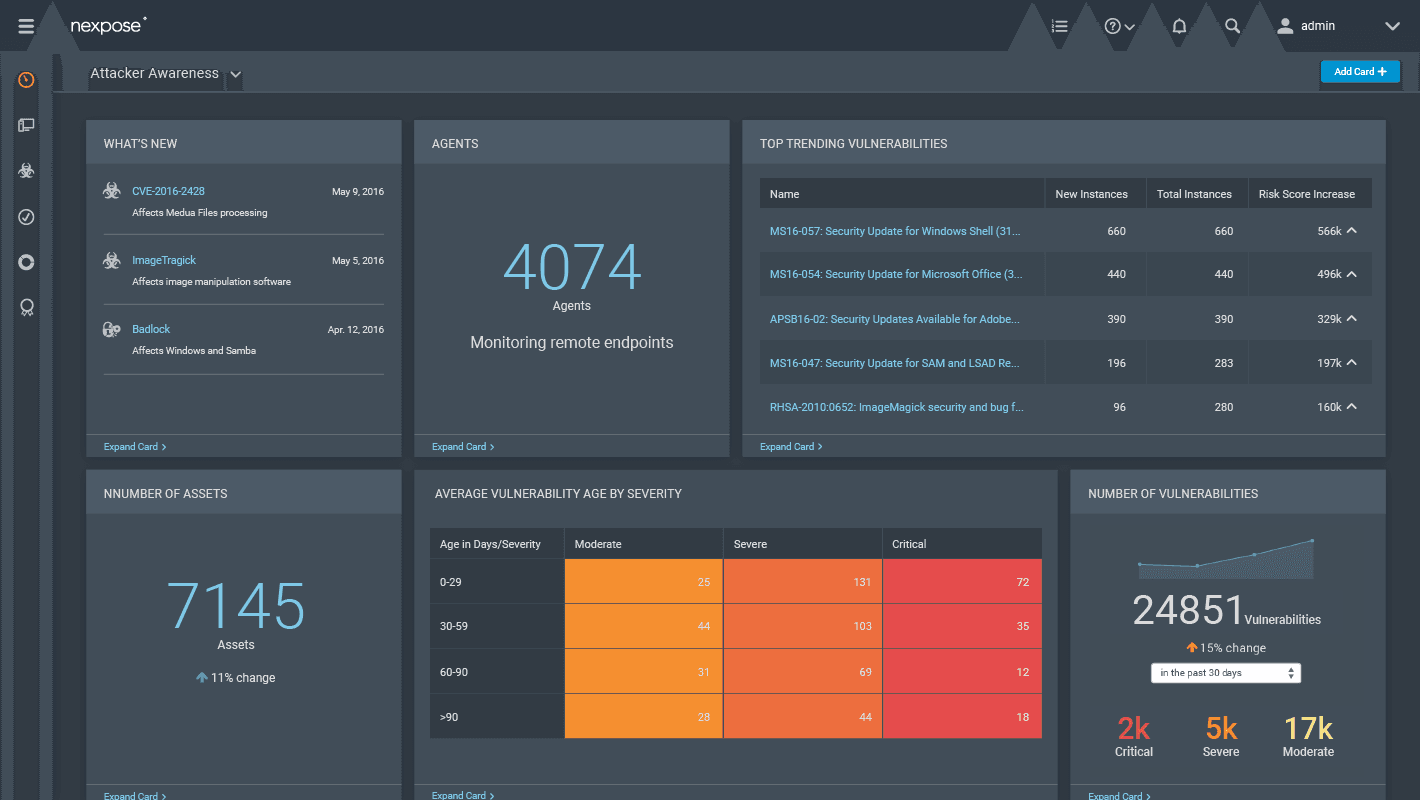
Rapid7 InsightVM is the other major competitor security teams evaluate alongside Tenable. The key difference is focus: Tenable is a vulnerability management specialist. Rapid7 is broader, combining vulnerability management with SIEM (InsightIDR), SOAR, and penetration testing (Metasploit) into a wider security operations platform.
If you want the best standalone vulnerability scanner with the deepest CVE coverage, Tenable wins. If you want a platform that covers vulnerability management plus detection and response in one vendor, Rapid7 is worth considering. Tenable has more plugins (70,000+ vs Rapid7's roughly 50,000) and the VPR scoring is generally considered more accurate than Rapid7's Real Risk Score.
Tenable vs Qualys vs Rapid7 vs CrowdStrike: Full Comparison
| Feature | Tenable | Qualys | Rapid7 | CrowdStrike |
|---|---|---|---|---|
| Primary Focus | Vulnerability management | Vuln mgmt + compliance | Detection + response | Endpoint protection |
| CVE Coverage | 70,000+ (most extensive) | 60,000+ | 50,000+ | Varies |
| Risk Prioritization | VPR (proprietary) | TruRisk | Real Risk Score | ExPRT.AI |
| OT/IoT Scanning | Yes (dedicated product) | Limited | Limited | No |
| AI Detection | Yes | Limited | No | No |
| Free Trial | Yes (Nessus) | Limited | Yes | Demo only |
| Gartner Position | Leader | Leader | Visionary | Leader (endpoint) |
Ready to try Tenable?
Start with a free Nessus Professional trial. See what vulnerabilities exist in your environment before committing.
Frequently Asked Questions
Is Tenable free?
Tenable offers a free trial of Nessus Professional. There is no permanent free tier. Paid plans start at $4,790/year for Nessus Professional.
What is the difference between Nessus and Tenable?
Nessus is a standalone vulnerability scanner. Tenable Vulnerability Management (formerly Tenable.io) is the cloud-managed version with dashboards, multi-scanner support, and team collaboration features. Tenable One is the full exposure management platform that combines all products.
How much does Tenable cost?
Nessus Professional starts at $4,790/year. Tenable Vulnerability Management starts around $3,500/year for 65 assets. Tenable One is custom priced based on environment size. Multi-year discounts are available.
Is Tenable better than Qualys?
Both are Gartner Leaders. Tenable has broader CVE coverage (70,000+) and stronger OT/IoT capabilities. Qualys has more built-in compliance modules and a slightly different pricing model. For pure vulnerability management, Tenable is generally considered the stronger choice. For compliance-heavy environments, Qualys is competitive.
What is VPR scoring?
Vulnerability Priority Rating (VPR) is Tenable's proprietary scoring system. It takes standard CVSS scores and adds real-world threat intelligence to produce a more accurate risk rating. A critical CVSS vulnerability might get a lower VPR if the exploit is complex or requires physical access.
Can Tenable scan cloud environments?
Yes. Tenable supports scanning across AWS, Azure, and GCP. The cloud security product provides CNAPP capabilities, cloud vulnerability management, and identity access management for cloud environments.
Does Tenable detect AI tools?
Yes. Tenable has added AI detection capabilities that identify when AI tools (including LLM-based tools like Grammarly and ChatGPT) are being used within your environment. This is valuable for organizations with AI governance policies.
Is Tenable good for learning cybersecurity?
Yes. Understanding vulnerability management with Tenable is a valuable career skill. Nessus is used widely across the industry and experience with it is listed on many cybersecurity job postings. The free trial is a good way to start learning.
What is the difference between Tenable and Qualys?
Tenable focuses on vulnerability prioritization with VPR scoring and has stronger OT/IoT capabilities. Qualys includes built-in patch management and has more compliance modules. Tenable is better for pure vulnerability management, Qualys for integrated compliance and patching.
What is the difference between Tenable and Rapid7?
Tenable is a vulnerability management specialist with 70,000+ plugins and VPR scoring. Rapid7 is a broader security platform combining vulnerability management with SIEM, SOAR, and Metasploit. Choose Tenable for the deepest scanning coverage, Rapid7 for a wider security operations platform.
Can Tenable scan OT and IoT devices?
Yes. Tenable has a dedicated OT security product that scans PLCs, industrial sensors, and IoT devices that standard vulnerability scanners cannot reach. This is critical for manufacturing, energy, and utility companies.
Is Nessus the same as Tenable?
Nessus is one product within the Tenable family. Nessus Professional is a standalone vulnerability scanner. Tenable Vulnerability Management is the cloud platform. Tenable One is the full exposure management suite. Nessus is the most well-known product but Tenable offers much more.
What Security Professionals Are Saying
"Nessus has been my go-to for vulnerability assessments for years. The VPR scoring saves hours of manual triage every week."
Security Engineer, via G2
"Powerful platform but expensive. The learning curve took our team about two months. Once you understand it, the depth of visibility is unmatched."
CISO at mid-size firm, via Gartner Reviews
How We Reviewed Tenable
We evaluated Tenable based on vulnerability detection coverage, risk prioritization accuracy, scanning capabilities, ease of use, pricing value, integration support, and competitive positioning. Our assessment includes platform testing, analysis of user reviews on G2, Gartner Peer Insights, and Capterra, and research into Tenable's product updates and market positioning.
Our Verdict
Tenable is the most comprehensive vulnerability management platform available. The combination of Nessus scanning, VPR prioritization, AI detection, and OT/IoT coverage gives security teams unmatched visibility. The price is enterprise-level, but for organizations that take security seriously, it is the standard for a reason.
Best for: IT security teams, MSSPs, and compliance-driven organizations that need the deepest vulnerability coverage and risk-based prioritization available.